Physical Address
304 North Cardinal St.
Dorchester Center, MA 02124
Physical Address
304 North Cardinal St.
Dorchester Center, MA 02124
Selecting the right engineering plastic is a critical decision in product development because material performance directly affects reliability, manufacturing cost, and long-term service life. Many precision components fail not because the plastic lacks strength, but because the selected material cannot maintain dimensional accuracy, resist wear, or perform consistently under real operating conditions.
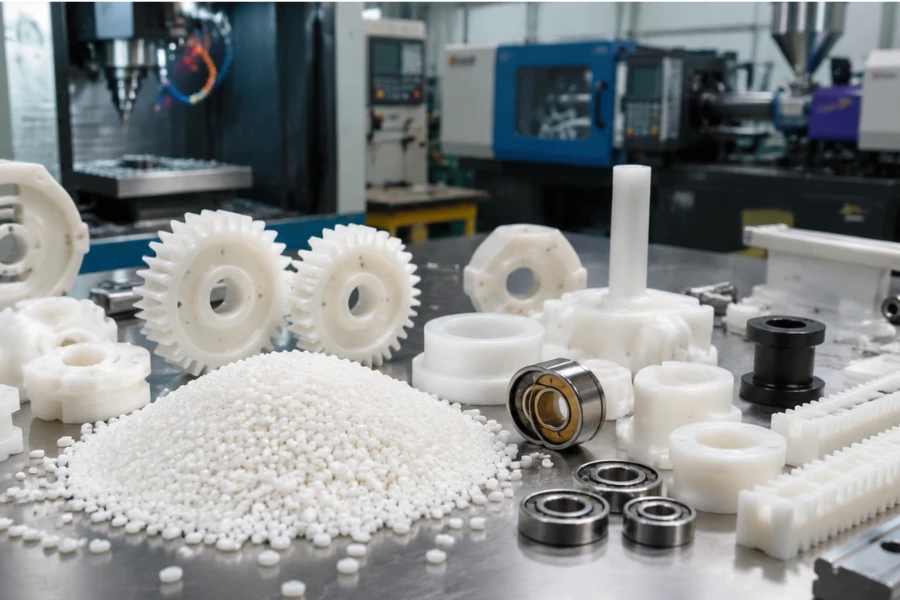
Acetal plastic, also known as Polyoxymethylene (POM), is widely used in engineering applications that require low friction, high wear resistance, excellent dimensional stability, and reliable mechanical performance. From precision gears and bearings to automotive components and industrial valves, Acetal provides a balance of properties that makes it a practical alternative to metals and other engineering plastics.
However, choosing the correct Acetal grade requires more than understanding basic material properties. Engineers must consider the differences between POM-H and POM-C, manufacturing limitations, injection molding behavior, design requirements, and application-specific risks. This guide explains Acetal plastic properties, material selection considerations, manufacturing factors, and how engineers determine whether POM is the right choice for a production component.
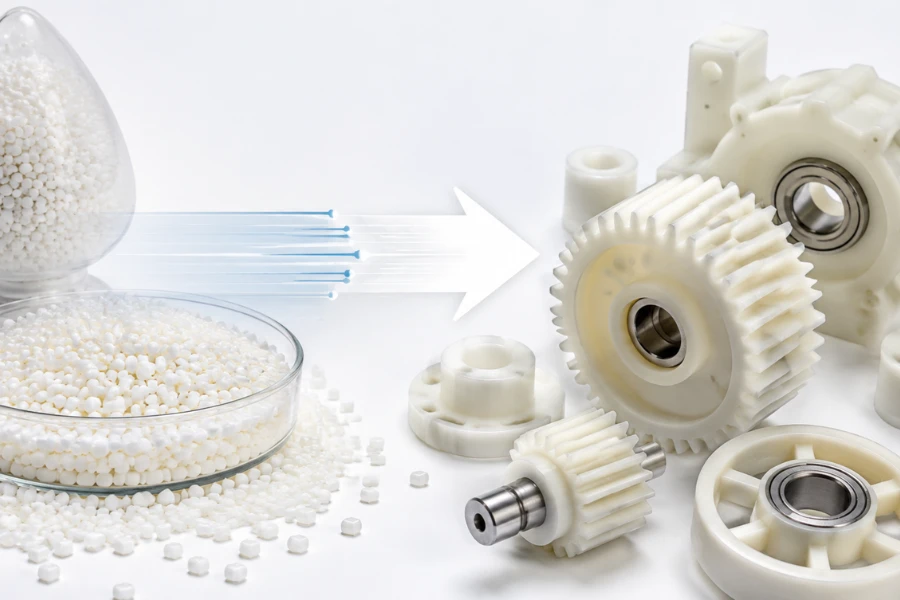
Acetal plastic is an engineering thermoplastic commonly known as Polyoxymethylene (POM). It is a semi-crystalline polymer widely used for precision mechanical components because of its combination of stiffness, strength, low friction, and dimensional stability.
Unlike commodity plastics such as polyethylene (PE) or polypropylene (PP), Acetal is designed for applications where mechanical performance and consistent tolerances are important. Its semi-crystalline structure allows the material to maintain rigidity while providing excellent fatigue resistance and wear performance.
The molecular structure of POM contributes to several important engineering characteristics:
Because of these characteristics, Acetal plastic is commonly selected for:
In many applications, Acetal can replace metal components where lower weight, corrosion resistance, and reduced maintenance requirements are important. However, it should not be considered a universal metal replacement. Engineers must evaluate load conditions, temperature, chemical exposure, and service environment before selecting POM.
For example, a precision gear operating thousands of cycles per day may benefit from Acetal because low friction and dimensional stability help maintain consistent performance. However, a structural component exposed to heavy impact loads may require a tougher engineering plastic such as nylon or a reinforced material.
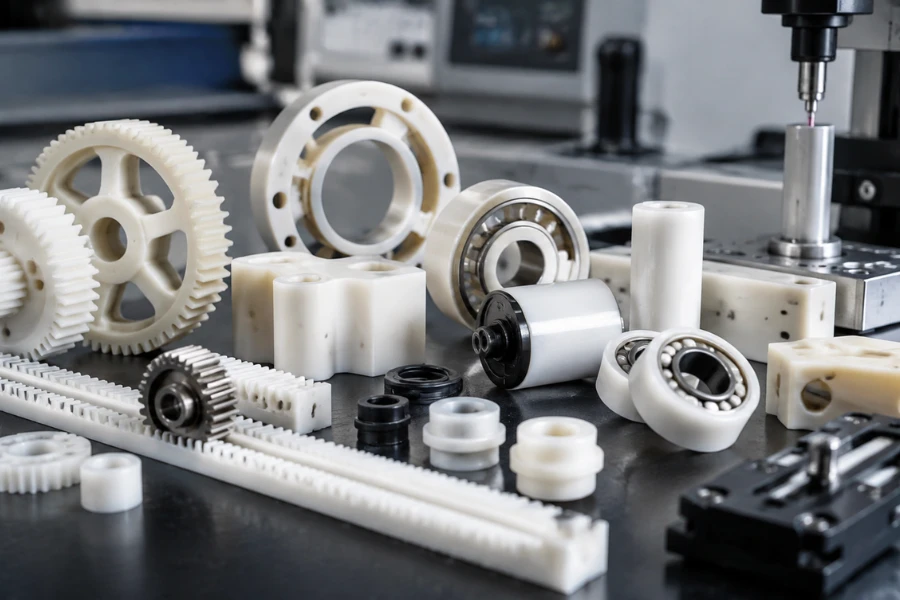
Acetal plastic is popular because it provides a balanced combination of mechanical, thermal, and chemical properties. Engineers usually select POM when multiple performance requirements must be satisfied at the same time.
A material with high strength but poor dimensional stability may create assembly problems. A material with excellent toughness but high friction may increase wear. Acetal performs well because it provides a practical balance between these competing requirements.
| Property | Engineering Benefit |
|---|---|
| High stiffness | Maintains shape under mechanical loads |
| Low friction coefficient | Reduces wear and improves movement efficiency |
| Excellent wear resistance | Extends component service life |
| Low moisture absorption | Maintains dimensional accuracy |
| Good chemical resistance | Suitable for fuels, solvents, and industrial environments |
| Fatigue resistance | Handles repeated mechanical cycles |
| Good machinability | Supports CNC machining and prototype development |
One of the main reasons engineers choose Acetal plastic is its ability to maintain dimensions under operating conditions.
Compared with many moisture-sensitive engineering plastics, POM absorbs very little water. This reduces dimensional changes caused by humidity variation and improves consistency in precision assemblies.
This makes Acetal suitable for components where small dimensional changes can affect performance, including:
However, dimensional stability does not mean that Acetal parts require no design consideration. Injection molded POM components still experience shrinkage because of their semi-crystalline structure. Tooling design and process control remain essential for achieving consistent production tolerances.
Low friction is one of the defining characteristics of Acetal plastic. Its smooth surface behavior allows moving components to operate with reduced friction and lower wear.
Common applications include:
For engineers, the advantage is not only reduced friction but also improved lifecycle performance. Components that experience repeated movement can maintain functionality longer when friction and wear are controlled.
However, Acetal is not always the best solution for every wear application. Extremely high loads, abrasive environments, or elevated temperatures may require modified materials such as filled POM grades, reinforced plastics, or metal alternatives.
Acetal provides good resistance to many chemicals, including fuels, solvents, and cleaning agents. This makes it suitable for automotive systems, industrial equipment, and fluid-handling components.
However, engineers should evaluate chemical compatibility based on actual operating conditions.
Important factors include:
Acetal performs well in many industrial environments, but strong acids and oxidizing chemicals can degrade the material over time. A component that passes short-term testing may still experience long-term failure if chemical exposure and mechanical stress occur simultaneously.
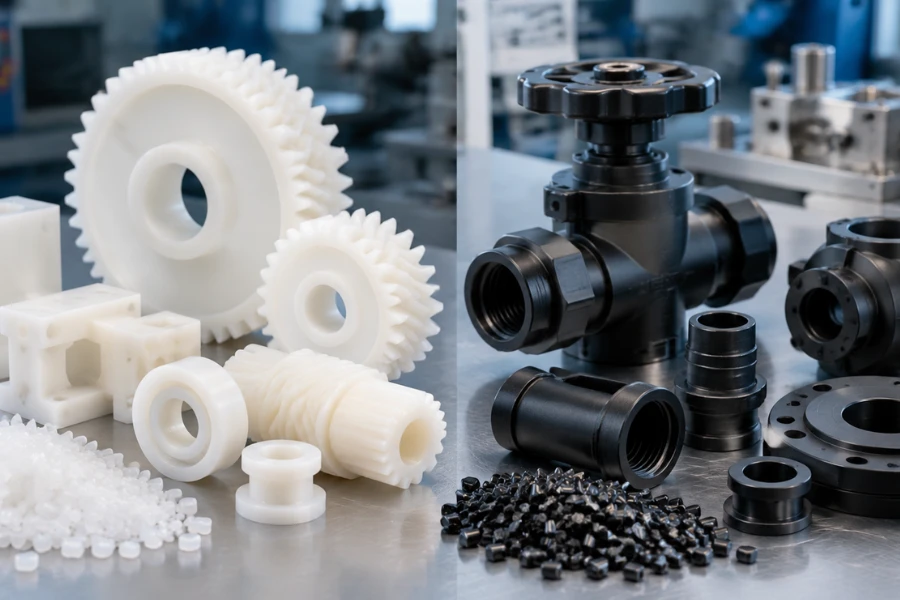
The exact properties of Acetal depend on the specific grade, manufacturer, and formulation. The following values represent common engineering ranges used during material selection.
| Property | Typical Range |
|---|---|
| Material type | Semi-crystalline engineering thermoplastic |
| Density | Approximately 1.39–1.42 g/cm³ |
| Melting point | Approximately 175–180°C |
| Continuous operating temperature | Around 90–100°C depending on grade |
| Injection molding shrinkage | Approximately 1.2–3.0% |
| Moisture absorption | Very low |
| Friction performance | Excellent |
| Machinability | Excellent |
These values help engineers compare Acetal with other engineering plastics, but material selection should always consider the complete application.
For example:
A precision gear may prioritize:
A valve component may prioritize:
The same Acetal material may perform differently depending on the design requirements and operating environment.
Acetal materials are mainly divided into two categories:
Both grades provide excellent engineering performance, but their molecular differences create different advantages.
POM-H generally provides higher mechanical strength and stiffness, while POM-C provides better chemical resistance and improved performance in demanding environments.
| Selection Factor | POM-H (Homopolymer) | POM-C (Copolymer) |
|---|---|---|
| Mechanical strength | Higher | Slightly lower |
| Stiffness | Higher | Very good |
| Friction performance | Excellent | Excellent |
| Chemical resistance | Good | Better |
| Hot water resistance | Lower | Higher |
| Thick wall performance | Higher porosity risk | Lower porosity risk |
| Typical applications | Gears, bearings, precision parts | Valves, pumps, fluid components |
POM-H is commonly selected when mechanical performance is the primary requirement.
Typical applications include:
The higher crystallinity of POM-H contributes to increased stiffness and strength, making it suitable for components that must maintain shape under continuous loading.
For example, a dry-running gear system may benefit from POM-H because stiffness, low friction, and fatigue resistance are more important than chemical resistance.
However, POM-H may not be the ideal choice for every geometry. Thick sections can have a higher risk of internal porosity, which may affect pressure-containing or fluid-contact components.
POM-C is often selected when environmental resistance and processing reliability are more important than maximum mechanical performance.
Typical applications include:
The main advantages of POM-C include:
For example, a valve component exposed to hot water cleaning cycles and chemical agents may be better suited to POM-C than POM-H.
The correct choice depends on the operating environment, not simply which material has higher strength. Engineers must evaluate mechanical requirements, environmental exposure, manufacturing process, and validation requirements together before selecting an Acetal grade.
Selecting Acetal plastic is not simply a decision based on strength or price. In real engineering projects, material selection depends on the relationship between performance requirements, manufacturing capability, operating environment, and total product lifecycle cost.
A common mistake during product development is choosing a material based on a single specification, such as tensile strength. A component may have sufficient strength but still fail because of excessive wear, dimensional change, chemical exposure, or poor processing performance.
Engineers typically evaluate Acetal plastic based on several key questions:
The following selection guide provides a practical approach for choosing the appropriate Acetal grade.
| Engineering Requirement | Recommended Choice | Reason |
|---|---|---|
| Maximum stiffness and mechanical strength | POM-H | Higher crystallinity provides improved mechanical performance |
| Precision gears and moving components | POM-H | Excellent stiffness, fatigue resistance, and low friction |
| Chemical exposure | POM-C | Better chemical resistance |
| Hot water environments | POM-C | Improved resistance to hydrolysis |
| Thick-wall molded components | POM-C | Lower risk of centerline porosity |
| General precision parts | Both grades | Selection depends on operating conditions |
A gear used in an automated mechanism may operate thousands or millions of cycles during its service life. The main concerns are not only initial strength but also:
In this situation, POM-H may be preferred because higher stiffness helps maintain gear geometry under repeated loading.
However, if the gear operates in a humid or chemically exposed environment, engineers may consider POM-C or modified grades depending on the conditions.
A valve component faces different challenges. The main concerns are:
For this application, POM-C is often a better choice because its molecular structure provides improved resistance in wet and chemical environments.
This demonstrates an important engineering principle:
The best material is not the one with the highest individual performance value. It is the material that provides the most reliable performance under actual operating conditions.
Acetal plastic is used across industries because it provides a unique combination of mechanical performance, wear resistance, and manufacturing flexibility. The material is especially valuable in components where reliability and precision are more important than the lowest material cost.
Precision mechanical parts are among the most common applications for Acetal plastic.
Typical components include:
Engineers choose Acetal for these applications because it reduces friction while maintaining dimensional stability.
For example, compared with metal components, Acetal gears can provide:
However, Acetal is not suitable for every gear application. High-torque systems, extreme temperatures, or heavy impact conditions may require reinforced plastics or metal components.
The design decision depends on:
Acetal plastic is widely used in automotive systems where components require low friction, chemical resistance, and consistent dimensions.
Common applications include:
Automotive environments often expose components to vibration, temperature changes, and chemical contact.
Acetal performs well because it maintains dimensional stability and resists many automotive fluids.
However, engineers must carefully evaluate temperature limits. Components located near high-temperature engine areas may require higher-temperature materials such as PEEK or reinforced engineering plastics.
Industrial machinery often requires materials that can operate reliably with minimal maintenance. Acetal is frequently used in:
The material provides advantages in applications involving:
For fluid-handling components, POM-C is commonly considered because of its improved chemical resistance and reduced porosity risk.
For example:
A pump component exposed to water and cleaning chemicals may benefit from POM-C, while a dry mechanical bearing may benefit more from POM-H.
Acetal can be used in medical and food-related equipment when the selected grade meets required regulatory and performance requirements.
Common applications include:
The advantages include:
However, engineers should verify:
Not every Acetal grade is automatically suitable for medical or food applications. The final selection must consider the specific application requirements.
One common question in engineering material selection is the difference between Acetal and Delrin.
The short answer:
Delrin is a brand of Acetal, while Acetal refers to the broader family of POM materials.
Delrin was developed as a homopolymer Acetal material and is known for its excellent stiffness, strength, and dimensional performance.
| Factor | Acetal | Delrin |
|---|---|---|
| Material category | General POM family | Specific Acetal brand |
| Polymer type | Includes POM-H and POM-C | Mainly homopolymer Acetal |
| Strength | Depends on grade | High mechanical performance |
| Applications | Wide range of engineering uses | Precision mechanical components |
Engineers should not assume Delrin is always the best choice. The correct material depends on the application.
For example:
The decision should be based on performance requirements rather than brand recognition.
Acetal plastic is widely used for injection molded components because it supports high-volume production and complex geometries. However, successful manufacturing requires careful control of tooling design, molding parameters, and quality validation.
Because Acetal is a semi-crystalline material, cooling behavior directly affects crystallization, shrinkage, and final part dimensions.
One of the most important considerations in Acetal injection molding is shrinkage.
Typical molding shrinkage:
| Parameter | Typical Range |
|---|---|
| Injection molding shrinkage | 1.2%–3.0% |
| Mold temperature | 80–120°C |
Compared with amorphous plastics, Acetal experiences greater dimensional changes during cooling because crystallization occurs during solidification.
Potential risks include:
To control these risks, manufacturers typically optimize:
For precision Acetal components, dimensional validation after molding is essential.
Gate location can influence:
For precision components such as gears, poor gate placement may create uneven shrinkage and affect functional performance.
Uneven cooling can create different crystallization rates throughout the part.
This may result in:
Balanced cooling is especially important for larger or thicker Acetal parts.
Acetal requires careful temperature management because excessive heat exposure can cause polymer degradation.
Potential problems include:
Manufacturers must control melt temperature and avoid excessive residence time inside the injection molding machine.
Although Acetal plastic is considered relatively easy to process, production defects can still occur when material behavior, tooling design, and molding parameters are not properly controlled. Because POM is a semi-crystalline material, small variations in cooling rate, filling behavior, or processing temperature can influence final part dimensions and performance.
Understanding common Acetal injection molding problems helps engineers reduce production risks during tooling development and mass production.
| Defect | Possible Cause | Engineering Solution |
|---|---|---|
| Dimensional variation | Uneven crystallization, inconsistent cooling, incorrect shrinkage compensation | Optimize cooling design, adjust molding parameters, validate tooling dimensions |
| Warpage | Uneven cooling, unbalanced wall thickness, residual stress | Improve part geometry, balance cooling channels, optimize gate location |
| Internal voids | Excessive shrinkage in thick sections | Reduce wall thickness, improve packing conditions, consider POM-C |
| Burn marks | Excessive melt temperature or long residence time | Reduce processing temperature and minimize material degradation |
| Flash | Excessive injection pressure or tooling issues | Optimize pressure settings and maintain mold condition |
| Weld line weakness | Poor flow design or unfavorable gate position | Improve gate placement and analyze flow behavior |
Dimensional control is one of the most important considerations when manufacturing Acetal parts.
Because POM has a high degree of crystallization, cooling conditions directly affect the final dimensions. Two parts produced from the same material can have different dimensional results if cooling conditions are inconsistent.
Common causes include:
For precision components such as gears, bearings, and mechanical guides, manufacturers should perform dimensional validation after tooling trials.
Typical validation methods include:
Warpage occurs when different areas of a molded part shrink at different rates.
Acetal components are especially sensitive to this issue because semi-crystalline materials experience volume changes during solidification.
Common design factors that increase warpage risk include:
To reduce warpage risk, engineers should:
Thick Acetal sections can experience internal voids caused by material shrinkage during cooling.
This issue is particularly important because the external surface may appear acceptable while internal defects remain hidden.
Potential risks include:
Design improvements include:
Material selection alone does not guarantee successful production. The part design must also match Acetal’s processing behavior and mechanical characteristics.
Good Acetal part design focuses on reducing stress concentration, controlling shrinkage, and maintaining consistent manufacturing conditions.
Uniform wall thickness is one of the most important injection molding design principles.
Large thickness variations can create:
Instead of creating thick sections, engineers often use:
to achieve stiffness without increasing material thickness.
Although Acetal has good fatigue resistance, sharp corners can concentrate mechanical stress and reduce component life.
Recommended design practices include:
This is especially important for moving components such as:
Acetal provides excellent dimensional stability, but extremely tight tolerances can increase manufacturing difficulty and cost.
Engineers should define tolerances based on:
A common mistake is specifying extremely tight tolerances without considering whether they improve product performance.
For example, a decorative housing may not require the same tolerance level as a precision gear assembly.
Proper tolerance definition helps balance:
Acetal and nylon are two of the most commonly compared engineering plastics. Both materials offer strong mechanical performance, but their advantages are different.
The correct choice depends on the application requirements rather than one material being universally superior.
| Property | Acetal (POM) | Nylon (PA) |
|---|---|---|
| Moisture absorption | Very low | Higher |
| Dimensional stability | Excellent | More affected by humidity |
| Friction performance | Excellent | Good |
| Wear resistance | Excellent | Good |
| Impact resistance | Moderate | Better |
| Fatigue resistance | Excellent | Good |
| Machinability | Excellent | Good |
| Typical applications | Gears, bearings, precision parts | Structural components, impact-resistant parts |
Acetal is usually preferred when the application requires:
Typical examples:
Nylon may be a better choice when the application requires:
Typical examples:
However, nylon absorbs more moisture, which can affect dimensional stability and mechanical properties over time.
Acetal is also compared with other engineering plastics depending on performance requirements.
| Material | Main Advantage | Typical Application |
|---|---|---|
| Acetal (POM) | Low friction and dimensional stability | Precision mechanical parts |
| ABS | Cost-effective and easy processing | Housings and consumer products |
| PEEK | Extreme temperature and chemical resistance | Aerospace and high-performance applications |
Acetal is often selected when a balance between cost and performance is required.
PEEK provides higher temperature capability but comes with significantly higher material cost.
ABS is more economical but does not provide the same wear resistance and dimensional stability.
Although Acetal is a high-performance engineering plastic, it also has limitations that must be considered during material selection.
Long-term exposure to ultraviolet radiation can cause:
For outdoor applications, engineers may need:
Acetal performs well with many chemicals but has limited resistance to:
Chemical compatibility should always be evaluated under actual operating conditions.
Compared with tougher engineering plastics such as nylon, Acetal provides lower impact resistance.
Applications involving:
may require alternative materials.
Acetal costs more than general-purpose plastics such as PP and ABS because it provides higher engineering performance.
However, the higher initial material cost can be justified when considering:
Material selection should consider total lifecycle cost rather than only initial material price.
Acetal plastic is commonly used for precision mechanical components such as gears, bearings, bushings, rollers, valves, and automotive parts. Engineers choose Acetal when low friction, wear resistance, and dimensional stability are required.
No. Acetal is the general material category for Polyoxymethylene (POM), while Delrin is a specific brand of Acetal produced as a homopolymer material. Delrin is known for high stiffness and strength, but other Acetal grades may provide better chemical or environmental resistance.
Yes. Acetal is widely used for injection molding because it supports high-volume production of precision parts. However, manufacturers must carefully control shrinkage, cooling conditions, gate design, and processing temperature.
Neither material is universally stronger. Acetal provides better dimensional stability, lower moisture absorption, and lower friction, while nylon generally provides higher impact resistance and toughness.
The main disadvantages include limited UV resistance, reduced resistance to strong acids, moderate impact performance, and higher material cost compared with commodity plastics.
Certain Acetal grades are available for food-contact applications, but engineers must verify the specific material certification and compliance requirements before selecting the grade.
Acetal plastic is a widely used engineering thermoplastic because it provides an effective balance of mechanical strength, low friction, wear resistance, and dimensional stability. These characteristics make POM suitable for precision components where reliability and consistent performance are critical.
However, successful Acetal applications depend on more than choosing the material. Engineers must consider grade selection, part design, tooling capability, injection molding conditions, and validation requirements before moving into production.
POM-H is often preferred for applications requiring higher stiffness and mechanical performance, while POM-C is usually better suited for chemical exposure, hot water environments, and fluid-contact components. By aligning material selection with operating conditions and manufacturing capability, companies can produce reliable Acetal components while improving product performance and reducing long-term maintenance costs.